No products in the cart.

Puerto Vallarta has become more than a destination for me
—it has become a sanctuary where healing, presence, and deep reconnection unfold naturally. I first arrived in July 2024, fresh from completing trauma release healing training, invited to share this work with a small group. Stepping off the plane, I felt open, tender, and curious. I never anticipated how profoundly the city itself would hold me.
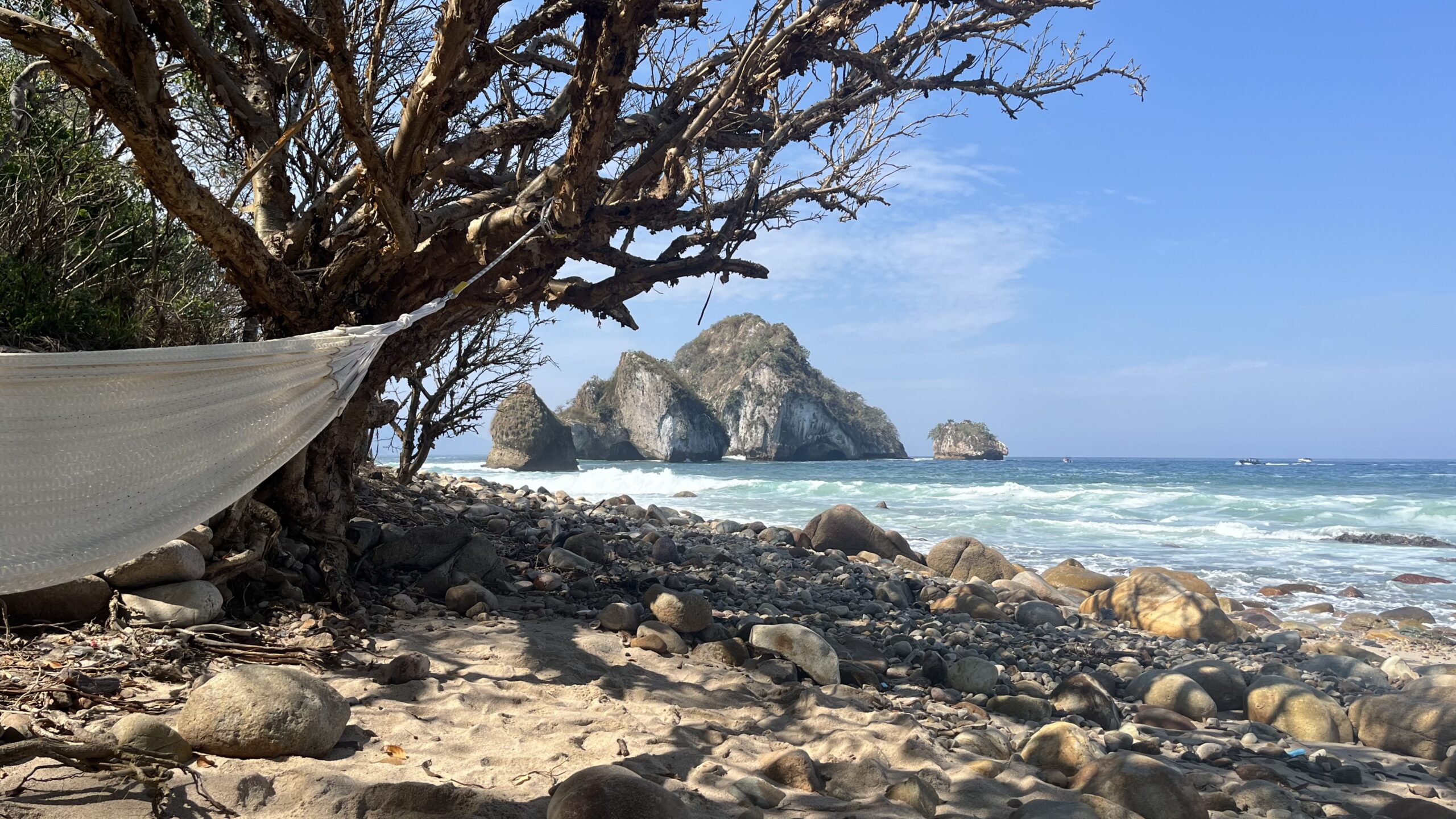
The air greeted me first: warm, soft, and lightly salted by the ocean. Dramatic mountains rose lush and alive behind the coastline, guarding the bay like ancient sentinels. Coming from Newfoundland’s rugged Atlantic cliffs, the marriage of mountains and sea felt instantly familiar—yet here, everything shimmered in vibrant tropical light. It took my breath away.
Mornings begin with sunrise on the beach. The sky blooms slowly from deep indigo to blush pink to molten gold, waves rolling in with a steady, heartbeat-like rhythm. Walking barefoot along the shoreline, cool sand underfoot, my body softens in ways I hadn’t realized it craved. Days unfold gently: fresh fruit, strong coffee, shared laughter, the scent of grilled seafood drifting on warm breezes, music floating nearby. Evenings paint the sky in coral and fire, the ocean mirroring every vivid hue in sunsets that feel almost surreal.
Beyond the climate, Puerto Vallarta radiates a deeper warmth—the people. Strangers greet you with ease; familiar faces welcome you back as if time never passed. Each visit introduces beautiful souls who leave lasting imprints on my heart. The city offers culture, variety, and a rare sense of safety that lets you truly exhale. You wander without urgency, dreaming of waterfalls and hidden islands just beyond the horizon, time stretching generously.
My morning practice of listening to the body has deepened here. What began as fifteen minutes of soft touch—gentle circles across the fascia; the body’s connective web that surrounds muscles, organs, nerves, and holds emotional imprints—has grown into a two- to three-hour ritual. I place hands lightly, listening through touch, signalling safety to soften. From there flows meditation, journaling, hydrogen water, prayer, and intuitive yoga.
What is Fascia
Fascia is the body’s ubiquitous connective tissue, forming a continuous web that provides structural support and transmits force. Emerging research suggests it may play a role in storing emotional memories and trauma responses. For instance, a 2014 review in the Journal of Bodywork and Movement Therapies by Paolo Tozzi explores how tissues like fascia might hold “memory traces,” potentially accessible through manual work, with phenomena like emotional releases during sessions. Practitioners and some studies link chronic tension patterns in fascia to unresolved stress or trauma, where the body braces protectively, leading to stuck patterns that contribute to physical and emotional symptoms. While the concept remains controversial and not fully proven in mainstream science—often described as a metaphor for mind-body connections—clinical observations and studies on myofascial release show promise for reducing somatic symptoms, pain, and stress (Goyal et al., 2017; Ajimsha et al., 2015). The body doesn’t heal on demand; it learns through repetition, patience, and small acts of care. My motto: slow to grow.
What is Myofascial
Myofascial refers to anything related to myofascia (or myofascial tissue), which combines “myo” (meaning muscle in Greek) and “fascia” (Latin for band or bandage). Fascia is the thin, tough, web-like connective tissue that surrounds, supports, and connects every muscle, bone, organ, nerve, and blood vessel in your body—like a continuous, three-dimensional spiderweb providing structure, flexibility, and protection.
When fascia becomes restricted—due to injury, trauma, stress, inflammation, poor posture, or repetitive strain—it can tighten, form “knots” or trigger points, and lose its normal pliability. This leads to myofascial pain, tightness, reduced mobility, or even pain referred to other areas of the body.
The Beauty Of Slowness
In a world obsessed with fast results, the nervous system thrives on slowness. Puerto Vallarta naturally invites this rhythm—the ocean’s pulse, mountains’ steady presence, air’s warmth all coax you to slow down and listen. When we do, the body reveals exactly what it needs.
In sessions, people often arrive saying, “I feel like I’m holding a lot.” Tight shoulders, clenched jaws, unexplained anxiety or exhaustion—the body protects us by bracing during stress, patterns lodging in the fascia over time. Through slow, fascia-focused touch (similar to myofascial release techniques), breath, and nervous system regulation, the body feels supported enough to release. It’s never forced; softening happens in safety. Clients leave calmer, more grounded, often describing a deep release of old energy to grow in freer directions.
Puerto Vallarta’s environment amplifies this work: ocean, mountains, and welcoming warmth invite the nervous system to relax.
The area hosts various healing retreats incorporating trauma-informed practices, somatic movement, myofascial release, breathwork, and nervous system resets—such as fascia-focused yoga, therapeutic tremoring (like Tension & Trauma Releasing Exercises or TRE), and holistic therapies at centers like Xinalani, Vikara Wellness, or Terra Noble. A session or retreat here becomes a powerful reset, reconnecting body and spirit before returning home.
I’ve visited twice and plan my third trip this Spring. Each return feels less like travel and more like coming home. Here, where mountains meet the sea, something inside me rests in profound peace.
If this way of gentle, embodied listening resonates, explore more about my work and upcoming retreats at www.roseandwomb.com. Sometimes the body simply needs the right space and guidance to remember its way home.