No products in the cart.

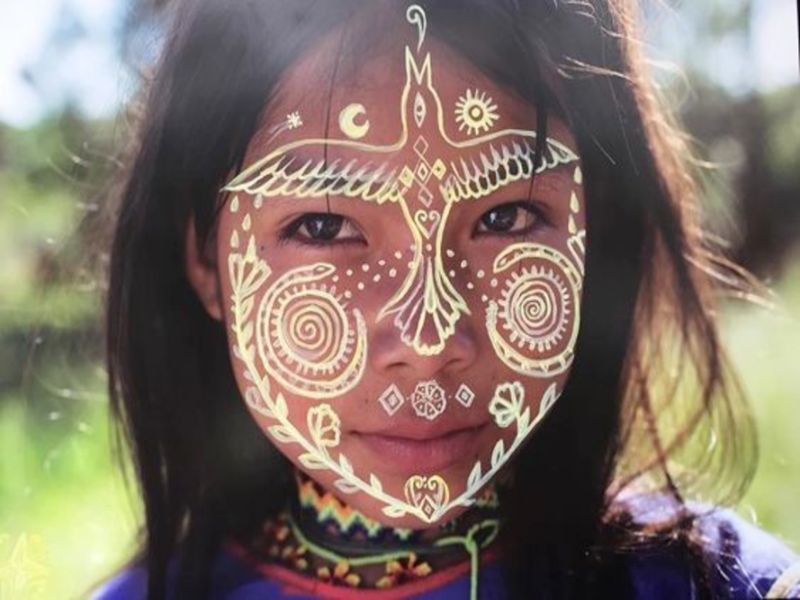
Deep in the Sierra Madre Occidental mountains of western Mexico, the Huichol people — who call themselves the Wixáritari — have been creating one of the most visually extraordinary art forms in the world for centuries. Rooted in spiritual vision and indigenous tradition, Huichol art is far more than decoration. It is a language — a vivid, intricate dialogue between the human soul and the divine.
The Spiritual Heart of Huichol Creativity
Huichol art draws its power from the people’s cosmology, ceremonies, and sacred rituals, particularly those involving the peyote cactus, which plays a central role in their spiritual life. The visions experienced during these rituals — bursting with color, geometric patterns, and symbolic figures — are believed to be direct communications from the gods: Tatewari (Grandfather Fire), Tayau (Father Sun), and Kauyumari (the Blue Deer), among others.
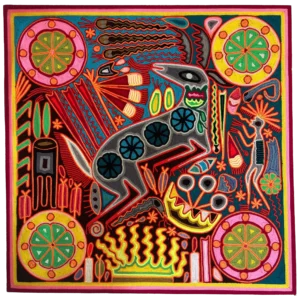
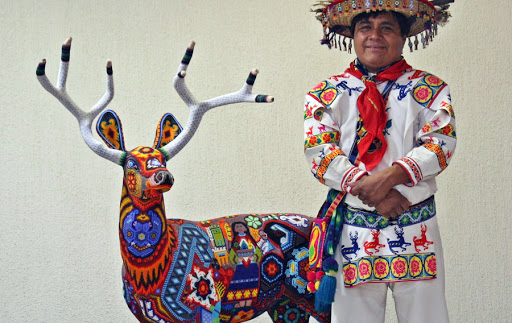
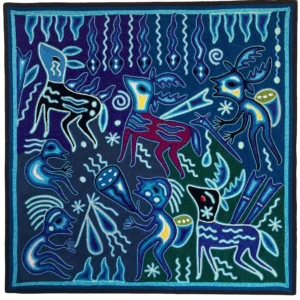 These visions are then painstakingly translated into art. The most iconic technique involves pressing brightly colored yarn or tiny glass beads onto boards or three-dimensional objects coated in beeswax and resin. The result is a dazzling mosaic of radiant color and symbolic meaning — jaguars, deer, eagles, serpents, corn, and the sacred peyote flower weaving together into scenes of remarkable complexity. Every element carries meaning; nothing is arbitrary.
A Craft of Extraordinary Patience and Skill
What makes Huichol art so remarkable is not just its symbolism, but the sheer discipline it demands. A single mask or sculpture can take weeks or even months to complete. Artists work bead by bead, yarn strand by yarn strand, building up images of almost supernatural precision. The palette is fearless — electric blues, hot pinks, vivid greens, and blazing yellows collide in combinations that somehow feel perfectly harmonious.
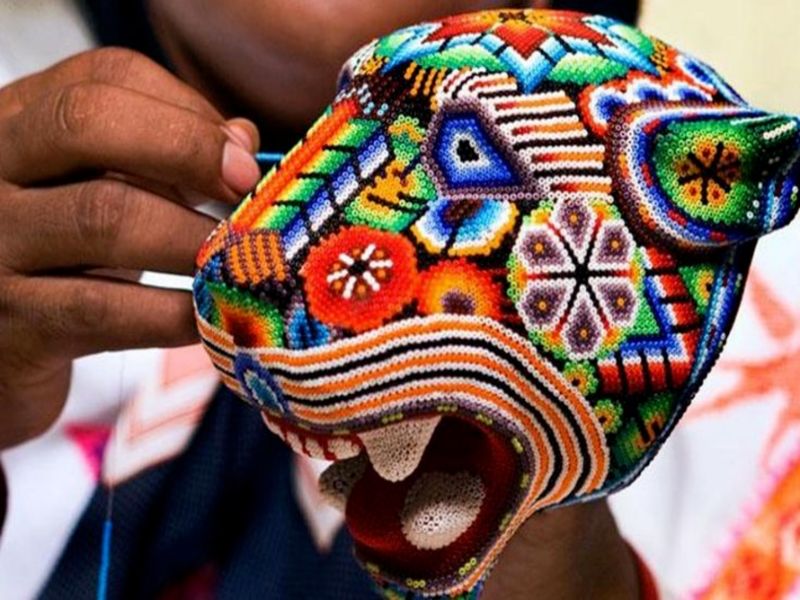
Traditionally, Huichol art was made for ceremonial purposes: prayer bowls (jicaras), votive arrows, and masks used in rituals. Today, it has evolved into a celebrated fine art form, with pieces collected by museums and galleries around the world — yet it has never lost its spiritual core.
Puerto Vallarta: A Canvas for Huichol Expression
Puerto Vallarta has become one of the most important centers for Huichol art outside the Sierra Madre. The city’s thriving arts scene and international tourism have given Huichol artists a platform to share their work with the world, and the result is a creative explosion that has transformed the city into an open-air gallery.
Along the famous Malecón boardwalk and in the cobblestone streets of the Romantic Zone, you’ll find Huichol artists and galleries showcasing everything from traditional yarn paintings to intricately beaded skulls, animals, and masks. Shops like Galería Huichol and Peyote People have become cultural landmarks, offering visitors the chance to witness artists at work — and to understand the deeper meaning behind every piece.
In Puerto Vallarta, Huichol creativity has also embraced contemporary forms. Artists experiment with large-scale sculptures, jewelry, and even fashion, bringing ancient symbolism into the modern world while remaining deeply respectful of tradition.
The Language of Symbols: Meaning Behind the Art
Every element in a Huichol artwork is intentional. To the untrained eye, the swirling patterns and vivid figures may seem purely decorative — but to the Wixáritari, each symbol is a word in a sacred visual language passed down through generations.
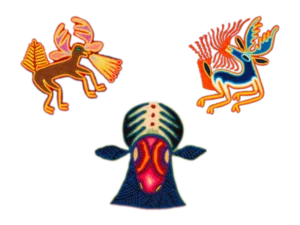
The Blue Deer (Kauyumari) is perhaps the most iconic symbol in Huichol art. The deer is a divine messenger, a guide between the human world and the spirit world, and is deeply linked to the peyote cactus — in Huichol belief, the deer and the peyote plant are spiritually one and the same. Spotting a blue deer in a piece is a signal that the work carries deep ceremonial significance.
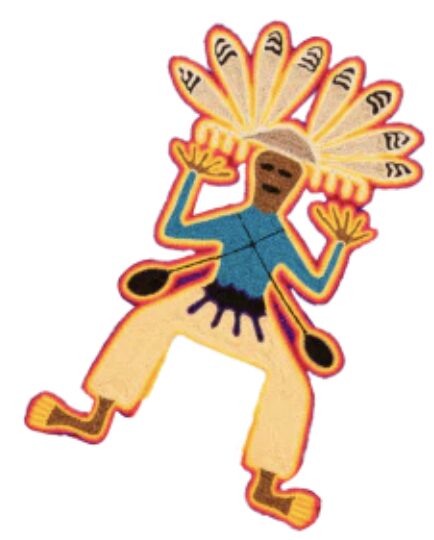
The Shaman The mara-akame helps bridge the worlds, acting as an intermediary for the entire community. The life of the shaman becomes that of people they serve.
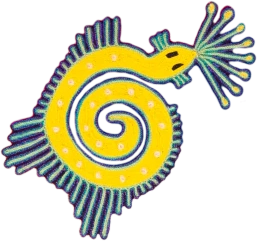 The Serpent symbolizes rain, water, and fertility — essential forces in an agricultural society. It also serves as a connector between the earthly and underworld realms, making it a figure of transformation and renewal.
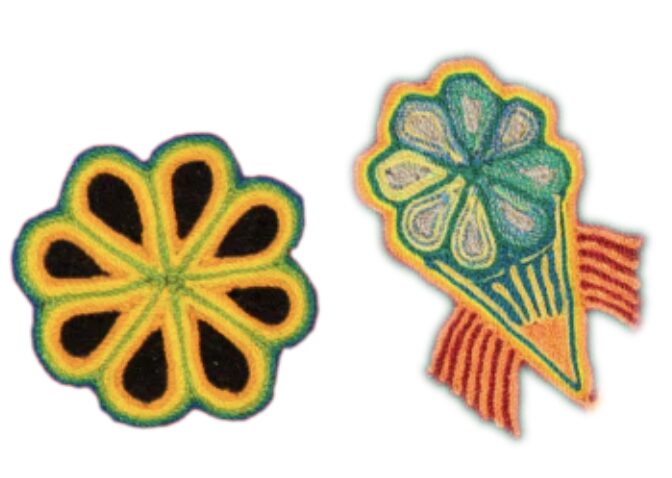 The Peyote Flower appears again and again, rendered as a many-petaled rosette in brilliant colors. It represents the gateway to spiritual vision, the sacred plant through which the Huichol make contact with their gods and ancestors.
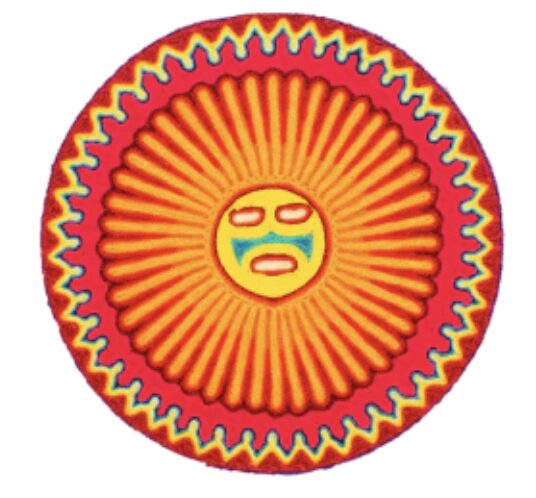 The Sun (Tayau) radiates outward in geometric bursts and is one of the most frequently depicted deities. Father Sun governs life, warmth, and time, and his image brings protection and energy to a piece.
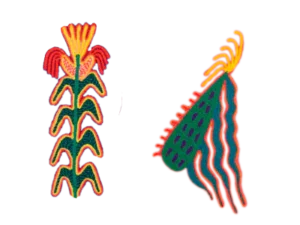
Corn (Maize) is the symbol of sustenance and life itself. For the Huichol, corn is not merely food — it is a living spirit, and its image in art is a prayer for abundance and gratitude to the earth.
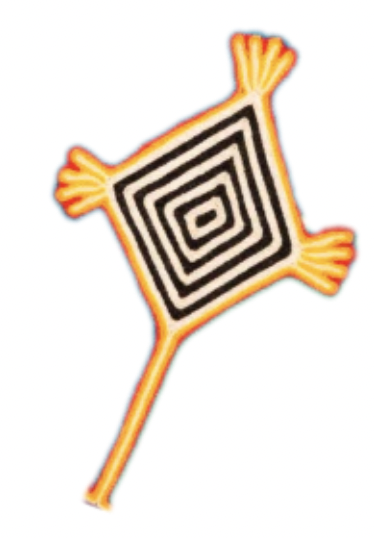 God’s Eye
Divine protection and spiritual insight, serving as a reminderof the interconnectedness of all beings and the importanceof balance in life. Its design reflects the watchful eye of the divine, guiding individuals on their spiritual journeys.
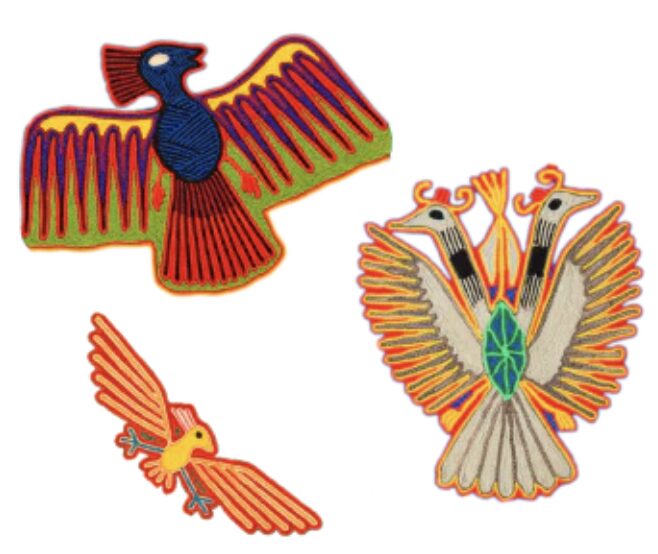
The Double-Headed Eagle is a symbol of balance — the harmony between opposing forces, heaven and earth, life and death. It is often used in pieces intended to bring equilibrium and protection to a home or space.
Colors themselves also carry meaning. Blue and green represent rain and the spirit world; red is associated with fire and the rising sun; yellow is the color of corn and Father Sun; and black represents the underworld and the night.
Understanding these symbols transforms the experience of viewing Huichol art. What begins as a feast for the eyes becomes something far deeper — a conversation with an ancient worldview in which every living thing is sacred, connected, and endlessly worthy of celebration.
An Art Form Worth Celebrating
Huichol art is alive, evolving, and absolutely stunning. In Puerto Vallarta, it has found a home that honors both its spiritual roots and its boundless creative potential. For anyone visiting the city, taking the time to explore this art form — and perhaps bring a piece home — is not just a purchase. It is a connection to one of Mexico’s most profound and enduring cultural traditions.